How Routine Monitoring Strengthens Termite Control Services
Termites are rarely dramatic at first. They do not arrive with the noise and visibility of rodents, and they do not leave obvious trails the way ants often do. In many homes and commercial buildings, their presence begins quietly, behind drywall, under flooring, inside crawl spaces, or along expansion joints in a slab. By the time damage is visible, the colony has often been active for months, sometimes longer.
That gap between infestation and discovery is exactly why routine monitoring matters so much. Effective termite work is not simply about applying a treatment and walking away. The strongest termite programs are built around follow-up, inspection intervals, moisture awareness, and a willingness to verify that conditions have not shifted since the last visit. Routine monitoring gives Termite Control Services their staying power. It turns treatment from a one-time event into a managed process.
In practice, that difference is substantial. A treatment can be technically correct on the day it is applied and still become vulnerable later if landscaping changes, a plumbing leak develops, mulch is piled too high, or an addition creates an untreated pathway into the structure. Monitoring catches those changes before they become expensive.
The problem with treating termites once and assuming the job is done
Many property owners understandably think of termite treatment the same way they think of replacing a broken window or patching a roof leak. There is a problem, a professional fixes it, and the issue is resolved. Termites do not work that neatly.
Subterranean termites, the species most professionals deal with in many regions, live in the soil and travel into structures through concealed routes. Their activity depends on moisture, temperature, soil conditions, and access points that can change over time. Drywood termites behave differently, but they create a similar challenge in one respect: they can remain hidden in inaccessible wood for long periods. In both cases, the conditions that allowed termite activity in the first place may persist even after treatment unless someone continues to check.
I have seen buildings where the original service was solid, but later work by other trades created openings that bypassed protected areas. A patio was poured after treatment, covering inspection zones. An irrigation line was adjusted and began soaking the foundation every evening. Firewood was stacked against siding, and a simple recommendation to keep clearance around the structure was forgotten within a season. None of those changes looked dramatic to the owner. All of them mattered.
Routine monitoring addresses that reality. It assumes that buildings are not static and that termite risk is not static either.
What routine monitoring actually involves
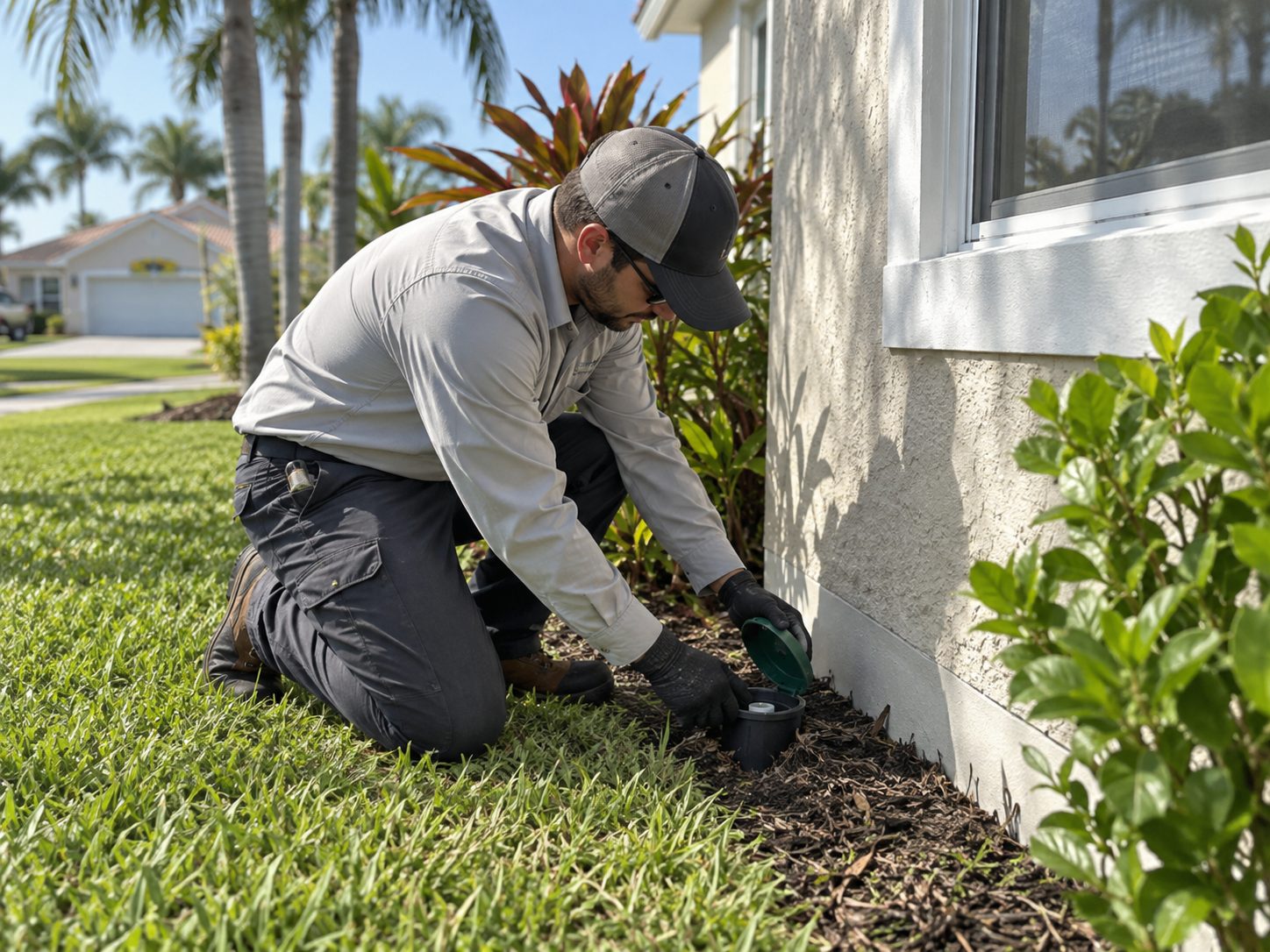
Monitoring is not just a quick walk around the property to satisfy a service calendar. Done properly, it is a structured assessment of both termite activity and termite pressure. The technician is looking for direct evidence, such as mud tubes, damaged wood, frass in the case of drywood termites, or activity in monitoring stations. Just as important, the technician is evaluating conditions that make future activity more likely.
A good monitoring visit often includes moisture readings in vulnerable areas, visual inspection of foundation lines, checks around plumbing penetrations, review of crawl spaces or basements where accessible, and evaluation of exterior grading and vegetation. In bait-based systems, it also includes checking each station for feeding and adjusting the service approach if activity is detected. In liquid treatment programs, it may involve confirming that no conditions have compromised the original treatment zone.
This kind of visit is less glamorous than the initial treatment, but it is often where the real value appears. Routine monitoring creates a record. Over time, that record shows patterns. A minor moisture issue that appears harmless in April may still be present in July and become far more significant after a wet season. A section of fence or deck attached to the structure may show early signs of activity before the house itself does. A trained eye can connect those details long before a homeowner would.
Why early detection changes the economics
Termite damage is expensive not only because of repair costs, but because hidden infestations tend to spread before anyone notices. Replacing a few linear feet of trim or one damaged sill plate is one kind of project. Rebuilding sections of subfloor, wall framing, cabinetry backing, or structural supports is something else entirely.
Routine monitoring changes the economics by shrinking the window between termite entry and termite discovery. That shorter window usually means less feeding, less moisture-related deterioration, and less invasive repair work. It also means more options. A localized issue caught early can often be handled more efficiently than a broad infestation that has had time to establish multiple feeding sites.
There is another financial point that deserves attention. Monitoring protects the investment already made in professional service. Whether a property owner has paid for a bait system, a soil treatment, spot treatment, or a comprehensive protection plan, the return on that investment depends on verification. If no one checks the system, the owner is essentially paying for protection on faith alone.
Monitoring supports every major treatment strategy
One misconception in the field is that only bait systems require regular follow-up. In reality, every major termite management strategy benefits from it.
With baiting programs, the connection is obvious. Stations are meant to be checked. Termite feeding may begin in one station and then shift. Bait may need replenishment. New pressure may appear in a part of the property that had previously been quiet. Without monitoring, the system loses much of its value.
Liquid termiticides also benefit from follow-up. Even when applied correctly, the treated zone around a structure can be affected by later disturbance. Soil can erode. Trenched areas can be altered by new utility work. Concrete cracks can widen. Homeowners may unintentionally create new entry points through renovations or landscaping. Monitoring helps confirm that the original protection remains meaningful under current conditions.
Wood treatments and spot applications need the same discipline. A localized drywood termite issue may appear resolved after direct treatment, but adjacent framing, trim, or stored wood may still be at risk. Routine checks help determine whether the problem was truly isolated or whether there is broader pressure within the property.
This is where experienced Termite Control Services separate themselves from companies that focus only on initial sales. Treatment solves the immediate issue. Monitoring protects the long-term outcome.
The role of seasonal and environmental changes
Termite pressure does not remain constant through the year. Weather patterns matter. Prolonged rain can increase soil moisture and encourage subterranean activity near foundations. Drought can push termites toward structures if moisture is available around leaking hose bibs, air conditioning condensate lines, or irrigation overspray. Warm seasons may bring swarming events that alert owners to nearby colonies, but swarmers are only part of the story. Significant feeding can occur with no visible swarm inside the structure.
Regional construction styles also change the monitoring picture. A slab-on-grade home presents different access challenges than an older home with a crawl space. Commercial buildings with multiple slab joints, utility penetrations, and landscaped perimeters can create extensive concealed pathways. Properties near wooded areas, retention ponds, or consistently damp soil often need especially careful observation.
An experienced technician does not inspect every property the same way because no two risk profiles are identical. One home may need close attention around an attached deck and poor drainage at the rear elevation. Another may be more vulnerable at bath traps, garage expansion joints, or planter beds built against stucco. Monitoring gives the technician repeated opportunities to evaluate those site-specific weaknesses as conditions change.
Small warnings that routine visits catch early
The value of monitoring often lies in details that seem minor in isolation. During a single service appointment, a technician may notice one or two of these and make recommendations before they become serious:
- Mud shelter tubes beginning to form along a hidden foundation seam
- Mulch or soil built up high enough to reduce the visible inspection gap
- Persistent moisture around a leaking spigot, HVAC line, or gutter discharge
- Fence posts, trellises, or steps providing wood-to-soil contact near the structure
- Activity in a bait station that suggests pressure is increasing before interior damage appears
Any one of these findings can change the service plan. Left unaddressed, they can also undermine the effectiveness of past work.
Monitoring is as much about conditions as it is about termites
People often expect termite professionals to focus only on insects. In truth, some of the most valuable recommendations have to do with the building itself. Good termite prevention sits at the intersection of pest control, moisture management, and basic construction awareness.
A technician may point out that flower beds have been raised against the siding since the last visit. He may notice that foam insulation extends below grade and obscures the foundation line. She may find cellulose debris in a crawl space after remodeling work. These observations matter because termites exploit conditions, not just weaknesses in chemical treatment.
This is one reason routine monitoring should not be treated as a low-skill administrative add-on. It requires judgment. A technician has to understand where termites are likely to forage, how building changes affect concealment and access, and which conditions deserve immediate correction versus simple observation at the next visit.
I have seen monitoring visits prevent major problems simply because someone paid attention to water. One property had no visible termite activity during the first few inspections after treatment, but a chronic leak at an exterior hose connection kept the soil damp near the garage wall. The owner had stopped noticing it. The technician kept documenting it. Once the leak was repaired and drainage improved, the risk profile around that elevation changed dramatically. That kind of result does not come from chemicals alone. It comes from repeated observation and persistence.
Documentation makes service stronger and disputes easier to resolve
There is a practical business side to routine monitoring that property owners sometimes overlook. Detailed inspection records create clarity. They show where activity was found, what was treated, what conducive conditions were observed, and what recommendations were made over time.
That documentation helps in several ways. First, it improves continuity when different technicians service the same property across the years. Second, it gives homeowners and property managers a clearer picture of recurring issues, especially moisture or maintenance problems outside the pest company’s control. Third, it reduces confusion if damage is discovered later and everyone needs to determine whether it is new, old, active, or previously reported.
For commercial clients and multi-unit properties, this recordkeeping is even more important. Staff changes, tenant turnover, and deferred maintenance can obscure the history of a site. A disciplined monitoring program preserves that history. It becomes easier to identify which buildings consistently show pressure, which areas need structural corrections, and whether current service intervals are appropriate.
Where property owners often make monitoring harder
Routine monitoring works best when the structure remains inspectable. That sounds simple, but many common choices reduce visibility and access.
Owners often cover foundation lines with dense shrubs, decorative stone, stacked materials, or deep mulch because the look is tidy and finished. Unfortunately, termites appreciate concealment just as much as homeowners appreciate curb appeal. Stored lumber, cardboard, and untreated wooden landscape features can create attractive staging areas close to the building. Interior access can also become difficult when attic hatches are blocked, crawl space doors are painted shut, or utility closets are packed floor to ceiling.
The issue is not that every obstacle causes termites. The issue is that obstacles reduce the odds of finding trouble early. Monitoring is strongest when inspection zones are visible and access points are usable.
A few habits make a noticeable difference:
- Keep mulch and soil from covering weep holes, siding edges, or foundation inspection gaps
- Fix plumbing leaks and drainage issues promptly, even if they seem minor
- Avoid storing wood, cardboard, or cellulose debris directly against the structure
- Tell the termite company about renovations, new patios, grading work, or irrigation changes
- Leave access to crawl spaces, attics, garages, and utility areas reasonably clear
These are simple steps, but they give Termite Control Services a much better chance to do their job well.
Monitoring frequency depends on risk, not guesswork
There is no universal schedule that suits every property. Annual inspections may be adequate for some low-risk sites with no history of infestation, well-maintained drainage, and stable construction details. Other properties benefit from more frequent Termite Control Services visits, especially if they have active baiting systems, prior termite activity, chronic moisture concerns, nearby wooded conditions, or structural features that limit visibility.
That is where professional judgment matters. Overservicing a low-risk property wastes time and money. Underservicing a high-risk one invites trouble. The best programs strike a balance between vigilance and practicality.
For example, a newer home with excellent clearance, dry crawl space conditions, and no signs of nearby termite pressure may only need periodic inspections and owner education. By contrast, an older building with previous infestation history, multiple additions, mature landscaping tight to the walls, and frequent plumbing repairs deserves closer attention. Neither plan is inherently better. Each is appropriate to the site.
Why monitoring builds trust in professional service
Termite control can feel opaque to customers because so much of the work concerns things they cannot see. Soil treatments happen below grade. Termites feed behind walls. Monitoring stations sit in the ground. Damage progresses out of sight. That makes communication especially important.
Routine monitoring gives professionals a chance to explain what they are seeing, what has changed since the last visit, and what the owner should watch for between appointments. It also gives customers something more tangible than a promise. They receive findings, recommendations, and evidence that someone is actively managing the risk rather than simply maintaining a contract.
That distinction matters when homeowners compare providers. A low price on initial treatment may look attractive, but if follow-up is rushed or superficial, the value erodes quickly. Strong Termite Control Services do not disappear after the first invoice. They return, inspect carefully, document conditions, and adjust their approach when the property changes.
A stronger defense is always an ongoing one
The most reliable termite protection is not based on a single product or a single visit. It is based on attention over time. Routine monitoring catches early activity, reveals vulnerabilities created by moisture or construction changes, and protects the value of prior treatment. It also sharpens the quality of professional judgment because each visit adds context to the last.
That is why the strongest termite programs are rarely the flashiest. They are methodical. They rely on trained observation, accurate records, and steady follow-through. When those pieces are in place, termite control becomes less reactive and far more durable.
For property owners, that means fewer unpleasant surprises and a better chance of addressing small issues before they become structural ones. For pest professionals, it means service that holds up beyond the initial treatment date. And for the building itself, it means something simple but important: a much better chance of staying sound, dry, and protected for the long term.
Maximum Pest Control
836 NE 7th Terrace Suite #5
Cape Coral, FL 33909
+1 239-772-7363
FAQ About Termite Control Services
What are two signs of a termite infestation?
Mud tubes along a foundation and piles of shed wings near doors or windows are two signs to investigate. Mud tubes are associated with subterranean termites. A licensed inspector can identify the insect and assess whether there is active infestation.
How many years does a termite treatment last?
There is no single timeline for all treatments. The method, site conditions, and maintenance affect how long protection lasts. Bait systems rely on monitoring and service. Ask the provider for the recommended inspection schedule and the terms of any coverage.
Is Termite Treatment Expensive in Cape Coral?
Cost depends on the termite species, the size and construction of the property, the extent of activity, and the treatment method. Request a written estimate after inspection and ask whether monitoring, follow-up visits, and renewals are included.